
1959 Dutch Grand Prix
The second round of the 1959 Formula 1 World Championship took place on May 31 in the Netherlands at the Zandvoort circuit, nestled among the sand dunes along the North Sea coast. Compared to the previous year, the track remained unchanged, still measuring 4,193 km in length, while the drivers faced the challenge of completing 75 laps.

Following the star-studded Monaco round, which delighted spectators with an impressive entry of 24 cars, the Dutch Grand Prix once again presented a far smaller field, with only 15 entrants admitted. With limited applications, most teams were restricted to just two cars, the sole exception being Scuderia Ferrari, who were granted permission to field up to four. As in Monaco, the Maranello squad was represented here by Jean Behra, Tony Brooks, Phil Hill and Cliff Allison — with the latter once again relegated to the role of a mere supporting driver. As for machinery, Scuderia’s arsenal was varied this time: two regular Ferrari 246s with 2.4-liter engines, one modified 246 with the new 2.5-liter power unit, and a hybrid Ferrari 156, combining a Formula 2 chassis with the 2.4-liter engine.
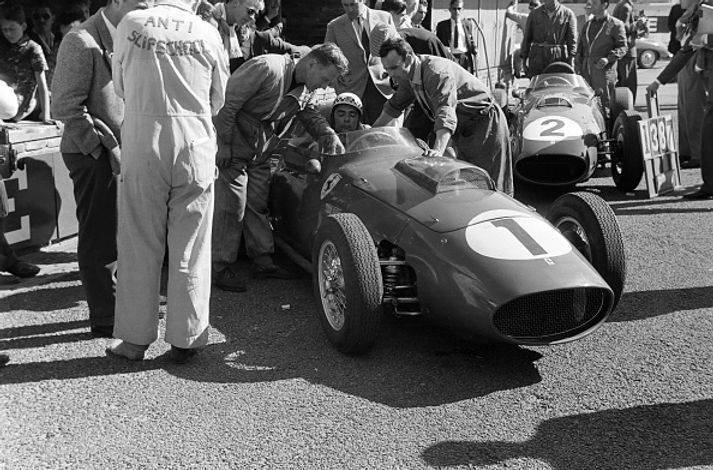
Meanwhile, after Jack Brabham’s sensational victory in Monaco, all eyes at Zandvoort were on John Cooper’s team, represented here by two brand-new Cooper T51s. Naturally, one of them was entrusted to Jack himself, while the second went to the team’s designated number two, the American Masten Gregory.

As for Cooper’s young rookie, Bruce McLaren, despite his impressive showing at Monaco, this time he was forced to remain in the shadows, taking on the role of a mere spectator. At the same time, as in the previous round, the factory T51s were joined here by two identical cars entered by Rob Walker’s private team, entrusted to his main drivers Stirling Moss and Maurice Trintignant.

Adding extra intrigue to the Dutch Grand Prix was the sight of Aston Martin team in the paddock, the renowned British marque making its long-awaited Formula 1 debut with their new DBR4 cars. Originally designed back in 1957, the cars featured a conventional front-engine layout and were powered by the team’s own straight-six units, rumored to produce around 250 horsepower. The task of showcasing them on track fell to the team’s leading sportscar drivers: the Englishman Roy Salvadori and the American Carroll Shelby.

Alongside the previously mentioned, the Dutch Grand Prix also featured two further British teams, BRM and Lotus. At BRM, stability was the word: Alfred Owen once again relied on his trusted pairing of Harry Schell and Jo Bonnier, entrusted with the same P25 cars already seen at the season’s opener in Monaco.
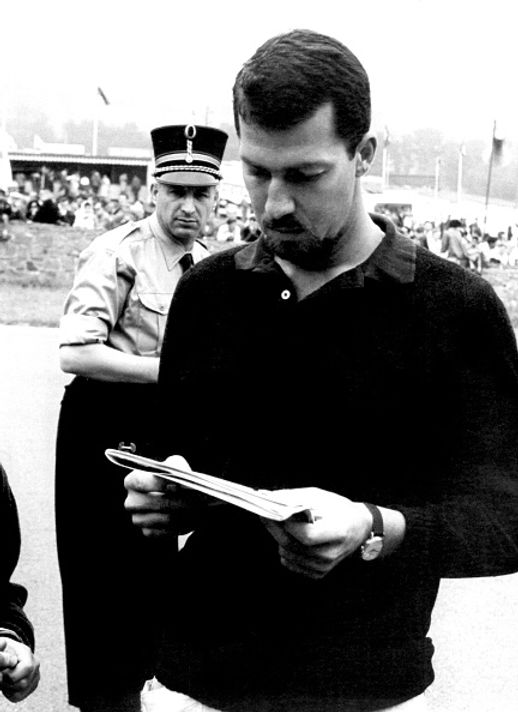
As for Lotus, their line-up saw a slight change: in place of the underwhelming American Pete Lovely, Colin Chapman brought in sportscar star Innes Ireland, who joined Graham Hill at the wheel of the Lotus 16.


Rounding out the entry list was the sole local driver, Count Carel Godin de Beaufort, who, just like the previous year, competed at the wheel of his privately entered 1.5-liter sportscar Porsche RSK.

Qualification
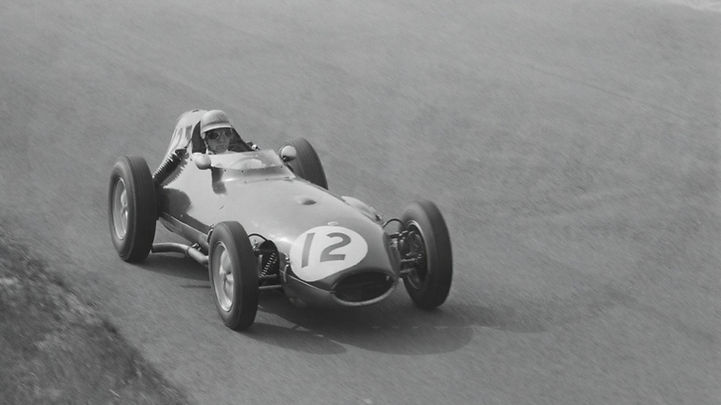
Qualifying for the Dutch Grand Prix was held over two days, and throughout both of them the British teams consistently demonstrated their superiority over their rivals from Scuderia Ferrari. On Friday, it was Stirling Moss who set the pace, having completed an extensive test program at Zandvoort shortly before the race weekend and now gliding around the sand circuit as if it were his own backyard. Yet, to the astonishment of many, Jo Bonnier matched his pace with a composed performance in the BRM, the car showing superb balance through the circuit’s sweeping bends. Come Saturday, Bonnier went even faster — over 1.5 seconds quicker — and in the end it was he who clinched pole position, the very first both for himself and for Alfred Owen’s team.

As for Moss, being only 0.2 seconds slower than the Swede, Stirling still earned a place on the front row — and he hardly batted an eye when, late in the sessions, Brabham nudged him down a spot, posting an equal time to Bonnier’s!

Meanwhile, the Scuderia drivers, just as in the previous year, found themselves at odds with the Dutch circuit, unable to match the pace of their main rivals. In the end, the best Jean Behra could manage with the hybrid Ferrari was 4th position, while Tony Brooks and Phil Hill in the standard 246s could do no better than 8th and 12th respectively.

As for Allison, he failed to put in a single fast lap over the two days of practice, however, with the agreement of the other team managers, he still was allowed to start the race – with the specific task of testing Ferrari’s new 2.5-liter engine. By contrast, things looked considerably brighter for Lotus than for the scarlet ones: Graham Hill displayed strong pace throughout both practice days and ultimately secured an impressive 5th, while newcomer Ireland also performed well, qualifying 9th on his very first attempt.

Meanwhile, Cooper’s second driver, Gregory, although showing clear improvement compared to Monaco, was still no match for Brabham and ultimately had to settle for only 7th, and a similar story unfolded at BRM, where Schell could not keep pace with his teammate Bonnier and managed only 6th. The Aston Martin debut was not particularly impressive either: their cars lacked both outright speed and stability in the corners, leaving Carroll Shelby and Roy Salvadori only in 10th and 13th respectively.

Yet the man who suffered most in qualifying was surely Maurice Trintignant, who lost an entire day of practice due to gearbox failure and ultimately could do no better than 11th.

Race
Race day began with a charming spectacle as the drivers rode out in open-top cars for a lap of honor, warmly greeting the crowd that filled the grandstands and the nearby dunes.

However, within minutes all attention shifted to the starting line: the drivers quickly donned their helmets and took their places in the cockpits, the engines roared to life, and with the waving of the national flag, the Dutch Grand Prix was underway!
Start. Bonnier makes a perfect getaway, immediately taking the lead, but the real excitement for the crowd comes from Gregory and Brooks, who shot off from the third row and instantly break into the leading group!

Meanwhile, the start turns into a real disaster for Moss: slowed by just a fraction of a second, Stirling looses ground to half the field and completes the opening lap in a disappointing 8th!
Position after Lap 1: Bonnier, Gregory, Brooks, Schell, Brabham, Behra, Graham Hill, Moss, Phil Hill, Ireland.
Lap 2: Having moved up to second, Gregory didn’t stop there; on the section behind the pits, he overtakes Bonnier, taking the lead in a Grand Prix for the first time in his career!

Meanwhile, Brabham, who had a less than ideal start, began fighting his way back through the field, first seeing Harry Schell yield to his charge.
Lap 3: Brabham gains another position at the expense of Brooks, and thus the Australian is already in the top three!

Lap 4: Once behind Brabham, Brooks finds himself at the head of a whole group — Schell, Behra, Graham Hill, Moss, Phil Hill, Ireland and Trintignant — all engaged in an intense battle on every section of the track!

Meanwhile, already on the fourth lap, the field lost its first competitor: Roy Salvadori stops in the pits with an overheated engine.

Lap 6: The battle within the tight mid-field pack shows no signs of easing, and as a result of a successful attack, Behra gains a position, moving ahead of Schell.

Lap 7: After giving way to Behra, Schell quickly finds himself under attacks from Graham Hill, and unable to keep the Lotus behind, the American let not only him but also Moss through!

Lap 8: Behra wastes no time - right after dispatching Schell, he’s already on Brooks’ tail and, on the very next lap, the Frenchman sweeps past his teammate to seize 4th!

Lap 9: As soon as Brooks yields to Behra, Graham Hill and Moss pounce, and in the blink of an eye both Britons relegate his fellow countryman further down the order!

Position after 10 laps: Gregory, Bonnier, Brabham, Behra, Graham Hill, Moss, Brooks, Schell, Phil Hill, Ireland.
After ten laps Gregory still holds the lead, but Bonnier is right on his tail, ready to pounce at the first opportunity!

Lap 12: One of the gears starts jumping out on Gregory’s Cooper, and seazing his chance, Bonnier immediately attacks the American to snatch back the lead of the race!

Meanwhile, on the same lap, trouble hits Brooks: a leak in his Ferrari’s oil line causes the car to slide on its own oil, and one by one he’s passed by Schell, Phil Hill, Ireland and Trintignant, dropping down to 11th!

Lap 13: The Hill-Moss duo closes in on Behra, and the Lotus driver immediately sticks to the Ferrari’s tail, hunting for an overtaking opportunity.

Lap 14: Phil Hill starts experiencing handling issues with his Ferrari, and Ireland and Trintignant immediately take advantage, easily slipping past the American!
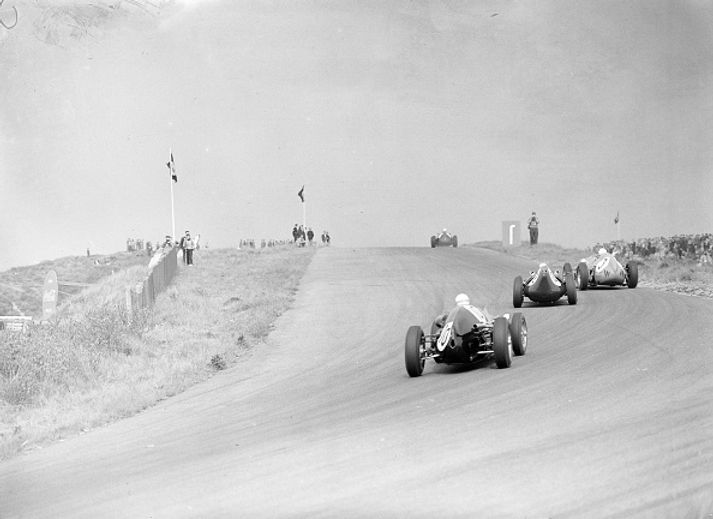
Lap 15: Following Bonnier, Brabham also catches up to Gregory and snatches 2nd from his teammate!

Lap 16: Failing to pass Behra, Graham Hill lets Moss through, hoping his skill and experience can breach the Frenchman’s defenses!

Lap 17: Phil Hill’s Ferrari is struggling so badly that even Brooks, whose own handling is far from perfect, slips past him with ease!

Lap 18: For several laps, Moss launches a series of attacks on Behra, but the Frenchman keeps pulling away on the straights, fully exploiting his engine advantage and leaving all of Stirling’s efforts in vain!

Position after 20 laps: Bonnier, Brabham, Gregory, Behra, Moss, Graham Hill, Schell, Ireland, Trintignant, Brooks.
Bonnier still holds the lead, but with a clear track ahead, Brabham closes in on the Swede, cutting the gap to just three seconds!

Lap 22: Moss keeps attacking Behra in almost every corner, yet the Frenchman coolly repels every move, leaving Stirling with no chance to pass. Frustrated by his rival’s stubbornness, Moss angrily raises his fist and nudges the nose of his Cooper against the back of the Ferrari, but even that fails to faze Behra, determined not to give an inch to the Englishmen!

Lap 24: After trying everything, Moss attempts a daring outside pass at the Tarzan hairpin, and thanks to phenomenal car control, Stirling finally leaves the Frenchman behind!

Moreover, stunned by such a bold move, Behra momentarily loses focus, and Graham Hill seizes the opportunity to move ahead as well!
Lap 25: Hill’s joy is short-lived: barely a lap later, suspicious smoke fills the cockpit of his Lotus, and recalling the Monaco mishap, the Englishman immediately pulls off the track and quickly leaves the car! Fortunately, the alarm proves false - within half a minute the smoke clears, allowing Graham to get back behind the wheel, yet the setback was severe - the Englishman rejoins the race almost at the very back of the field!

Lap 26: The relentless pace proves too much for Shelby's car: his engine fails in a high-speed corner, catching Carroll off guard, and the American spins off the track! Fortunately, the incident causes no serious harm to either the driver or the car, yet the premature retirement marks a disappointing conclusion to Aston Martin’s debut.
Lap 27: Second gear starts jumping out on Brabham’s car, just like his teammate’s, yet the issue barely affects the Australian’s pace as he continues to close in on Bonnier!

Meanwhile, Moss is showing an even more impressive pace: with Behra finally behind him, he sets one fastest lap after another and, сlosing in on Gregory, Stirling overtakes the American with ease, storming straight into the top three!
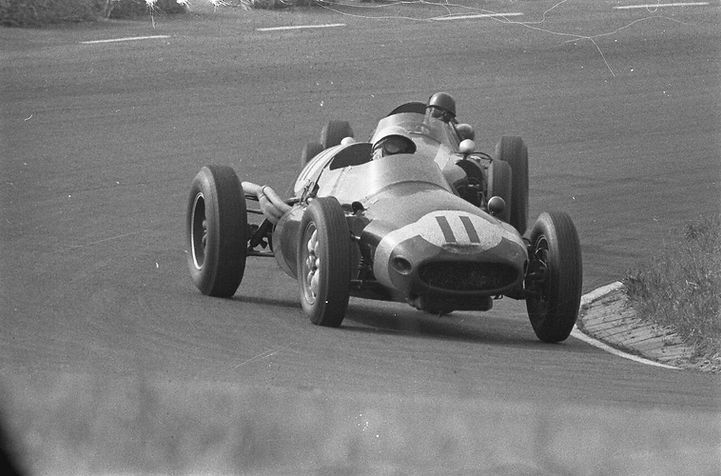
Lap 30: Having completely closed the gap on Bonnier, Brabham attacks the Swede at the end of the main straight and, with a perfectly timed late braking, takes the lead in the race!

Lap 31: Refusing to give up the lead, Bonnier sticks to the Australian’s tail, hunting for any chance to strike back!

Lap 34: After passing the first series of corners, Bonnier finally launches his long-awaited counterattack, and, outbraking his rival in the hairpin behind the pits, the Swede retakes the lead!

Lap 37: Behra continues to lose ground, and, unable to fend off Schell’s relentless charge, the Frenchman is already pushed out of points!

Position after 40 laps: Bonnier, Brabham, Moss, Gregory, Schell, Behra, Ireland, Trintignant, Brooks, Phil Hill.
Back in the lead, Bonnier increases his pace, pulling slightly away from Brabham, but now Moss is the real threat, hurtling down the track and cutting the Swede’s gap to just 8 seconds!

Lap 41: Trintignant dives into the pits to check his throttle linkage and adjust the rear shock-absorbers, and after the work is done, the Frenchman gets back to the track only in 11th.

Lap 42: Pushing his Cooper to the limit, Moss smashes the track with the fastest lap of the race — a blistering 1’36.6!

Lap 43: Graham Hill’s Lotus starts shaking noticeably under braking, and the Englishman immediately heads to the pits for a check. After a thorough inspection of both suspensions and brakes, Chapman’s mechanics discover a leak in the front brake system, and after topping it up, the Englishman is released back onto the track.

Meanwhile, by mid-distance, Brooks’ Ferrari has become completely unmanageable due to an oil film on the rear suspension and tires, and, realizing the fight is hopeless, Tony finally heads into the pits, retiring.
Lap 46: Moss finally catches second-placed Brabham and immediately goes on the attack, but the Australian, famous for his stubbornness, coolly fends off Stirling’s assault, making it clear this won’t be an easy ride!

Lap 47: A gearbox failure leaves Schell with no choice but to stop at the side of the track, costing Harry a great chance to score his first points of the season!

Meanwhile, after the American’s retirement, Behra inherits 5th, but the Frenchman can’t relax just yet - the debuting Ireland’s Lotus is already looming in his mirrors!

Lap 49: After several laps of intense battle, Moss finally outbrakes Brabham at the end of the main straight and immediately sets off in pursuit of the race leader!

Lap 54: With his brakes repaired and pace returning, Graham Hill catches up to Trintignant, and, facing little resistance, seizes 8th from the Walker driver!

Lap 60: With fifteen laps to go, the race hits its climax: Moss catches Bonnier just as the Swede is held up by backmarker Behra, and, wasting no time, Stirling sweeps past with a lightning move to become the new race leader!

Meanwhile, distracted by the leaders’ duel, Behra makes a small mistake and drives off the track, allowing Ireland to move ahead effortlessly!
Position after 60 laps: Moss, Bonnier, Brabham, Gregory, Ireland, Behra, Phil Hill, Graham Hill, Trintignant, Allison.
Now in the lead, Moss is unstoppable - soaring ahead and pulling away from Bonnier as if carried on wings!

Lap 63: Moss is in trouble! After leading for only three laps, the Englishman's Cooper suddenly loses pace, leaving Stirling no choice but to pull into the pits! After inspecting the car, the Walker crew deliver the bad news — a gearbox bearing failure - and Moss’ hopes of continuing the race vanish instantly!

Heartbroken, Stirling drags himself out of the car and settles on the pit wall, bitterly regretting yet another missed victory, while on the circuit, Bonnier seizes the lead again, the Englishman’s abrupt retirement proving to be a true twist of fate!

Final lap: After confidently leading the remaining 12 laps, Bonnier finally crosses the finish line first, claiming his very first Grand Prix victory!

As the Swede brings his car to a halt, he’s engulfed by thunderous cheers and embraces from Owen’s crew - at long last, their years of waiting pay off with a maiden victory to celebrate!

Meanwhile, Brabham crosses the finish line in 2nd, 14 seconds adrift, a result that not only consolidates his lead in the championship but also proves his Monaco triumph was anything but a fluke. The podium is rounded off by his teammate Gregory, who also delivers a flawless drive today and matches his best result from two years ago. Next, in fourth place, comes debutant Ireland, who in his very first Grand Prix shows his worth and immediately opens his account with points, while fifth place goes to Behra, whose effort ensures that Scuderia still leaves Zandvoort not empty-handed. As for the final point for fastest lap, it goes to none other than Moss - a small consolation for the Englishman, who nevertheless emerged as the true hero of this Grand Prix.

Interesting facts:
- Jo Bonnier’s first and only victory;
- Jo Bonnier’s first and only pole-position;
- Masten Gregory's first leading in Grand Prix;
- Innes Ireland's debut and first points;
- BRM team’s first pole-position and victory.
Driver standings

Constructor standings

Alternative GP results
