
1960 Season Review
The 1960 season marked the end of the 2.5-litre Formula 1 era, the peak of Cooper’s success, Lotus’s first major breakthroughs, and one of the most difficult periods in Ferrari’s history.
Cooper
Having secured its first Drivers’ and Constructors’ Championships the previous year, the Cooper team was determined to build on its success and significantly refined its rear-engined cars, introducing the new T53, nicknamed the Lowline for its low-slung profile.

As expected, these cars proved to be among the fastest in the field, and the final championship standings offered clear evidence of Cooper’s superiority: six victories in nine races, a second consecutive Drivers’ Championship, and another commanding triumph in the Constructors’ Championship. That said, the T53s were not invariably superior in outright pace: at certain rounds, Lotus, BRM and Ferrari proved more than capable of challenging the Surbiton-built machines. Cooper’s greatest strength, however, lay in its exceptional reliability, which allowed Jack Brabham and Bruce McLaren to win races and secure podium finishes time and again; in the end, this turned the battle for the Drivers’ title into an internal contest between the two Cooper drivers.

For Jack Brabham, the season got off to a far from promising start: a gearbox failure let him down in Argentina, while in Monaco he crashed out after pushing too hard in an attempt to shake off the pursuing Stirling Moss. Yet these early setbacks seemed only to spur the Australian on. In the Grands Prix that followed, he embarked on an impressive run of five consecutive victories, securing his second World Championship with ease and leaving his rivals trailing far behind. Having reached the pinnacle of the sport for the second year running, Brabham firmly established himself as one of the outstanding drivers of his era, proving beyond doubt that his first title triumph had been no fluke.

Bruce McLaren, by contrast, made a superb start to the season, winning in Argentina and finishing second in Monaco, results that put the young New Zealander at the top of the championship standings in its opening rounds. However, he was noticeably slower than his team-mate in outright pace, a difference that was particularly evident in qualifying: over the course of the entire season, McLaren managed to secure a place on the front row only once. Nevertheless, Cooper’s exceptional reliability enabled him to deliver consistently strong race results, and with six podium finishes to his name by the end of the season, McLaren comfortably secured second place in the championship — arguably the best result he could have achieved against Brabham.

R R C Walker Racing Team
Meanwhile, the only driver genuinely capable of challenging Brabham for the title that year was none other than Stirling Moss, a four-time World Championship runner-up who, as in the previous season, continued to race for Rob Walker’s privateer team.

Having switched from the previous year’s Cooper T51 to the new Lotus 18, Moss demonstrated the car’s enormous potential as early as the second round in Monaco, securing a commanding victory and giving Colin Chapman his first win in Formula 1.

However, already at the fourth round of the championship, the ill-fated Belgian Grand Prix, Moss suffered a serious crash during practice and was sidelined for an extended period, effectively ending his hopes of beating Brabham to the title.
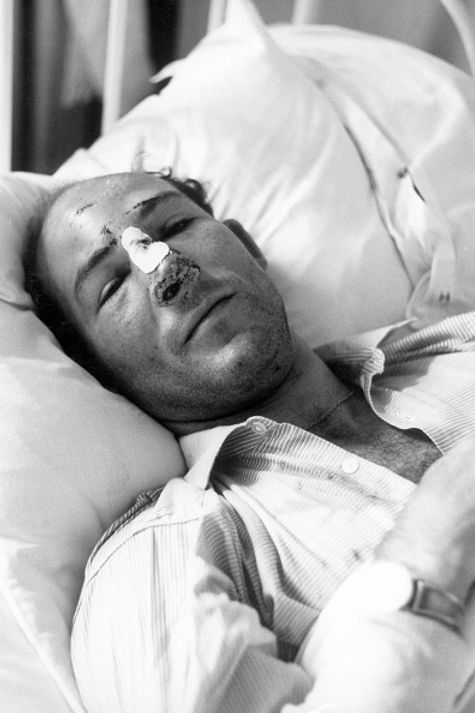
Nevertheless, another commanding victory in the season-ending United States Grand Prix allowed the Englishman to bring a difficult year to a fitting close, secure third place in the final championship standings, and prove that he remained a force to be reckoned with at the highest level.

Lotus
The 1960 season marked a major breakthrough for Colin Chapman’s team. Following Cooper’s example, Chapman decided to abandon the front-engined layout in favour of a rear-engined design, unveiling the new Lotus 18 — a car weighing just 445 kg, making it the lightest machine on the grid.

In the hands of Stirling Moss, the Lotus 18 became a truly formidable weapon. Thanks to the Englishman’s skill, Chapman celebrated his first Formula 1 victory as early as Monaco, while Moss added another triumph at the United States Grand Prix towards the end of the season. Meanwhile, the achievements of Lotus’s works drivers were no less impressive. The team’s new leading driver, Innes Ireland, secured three podium finishes — in the Netherlands, Britain and the United States — which earned him fourth place in the final championship standings, immediately behind Moss.

The team’s two young newcomers, John Surtees and Jim Clark, were making their mark as well. Despite contesting just four Grands Prix that season, Surtees managed to secure his first podium finish at the British Grand Prix and his maiden pole position in Portugal; these achievements were all the more remarkable given that John was simultaneously competing in the Motorcycle World Championship, where he went on to claim yet another world title.

Clark, meanwhile, scored points on three occasions in his debut season, also claiming his maiden podium finish at the Portuguese Grand Prix, and ended the championship in a respectable ninth place.

All these results helped Lotus secure a convincing second place in the Constructors’ Championship — a remarkable achievement considering that the team had managed just three points-scoring finishes over the previous two seasons. However, Chapman paid a heavy price for this success: the team’s fourth driver, Alan Stacey, was killed in a crash at the Belgian Grand Prix after a bird struck him in the face.

BRM
Unlike Cooper and Lotus, the 1960 season proved a bitter disappointment for Alfred Owen’s team, despite seemingly having everything it needed to succeed. The new rear-engined BRM P48s, which replaced the front-engined P25s, were fast enough to compete on equal terms with Cooper, Lotus and Ferrari, while the team’s driver line-up was equally impressive, featuring such established drivers as Jo Bonnier, Graham Hill and Dan Gurney.

Each of the three drivers had a chance to win at least one Grand Prix during the season, but all their efforts came to nothing due to the extremely poor reliability of the Bourne-built cars, with engine failures proving particularly troublesome. In the end, BRM scored just eight points over the entire season and managed only one podium finish, leaving it fourth in the Constructors’ Championship — a result that fell well short of the expectations of both Alfred Owen and his drivers.
Jo Bonnier made a superb start to the season with impressive performances in Argentina and Monaco, where he emerged as one of the leading contenders for victory alongside Jack Brabham and Stirling Moss. However, technical problems thwarted his efforts on both occasions, leaving the Swede with just two points to show for his early promise. The races that followed brought little but further disappointment, and Bonnier did not score again until the season-ending United States Grand Prix, where he finished fifth, only to miss out on another well-deserved podium finish due to engine trouble.

Meanwhile, the 1960 season proved something of a mixed bag for Graham Hill. Having failed to score a single point during his time with Colin Chapman’s team, the Englishman moved to BRM in the hope of achieving his first successes in Formula 1, and to some extent he succeeded, securing his first podium finish and World Championship points at the Dutch Grand Prix.

However, Hill could also have achieved much more that season, but, like his team-mates, he was let down not only by technical problems but also by his own frequent mistakes. On the narrow streets of Monte Carlo, Graham crashed into the barriers while engaged in a fierce battle with Phil Hill and Bruce McLaren for a podium place; at Reims, his engine stalled on the starting grid, leaving his BRM stationary and directly in the path of Maurice Trintignant, who struck it at full speed.

However, the most bitter disappointment for the Englishman came at his home Grand Prix. Having stalled on the starting grid once again, Hill produced an extraordinary drive, fighting his way from the back of the field into the lead, only to fall short of victory. Under pressure from Brabham, Graham made a mistake and went off the track, ending the race with nothing to show for his remarkable recovery. Nevertheless, there can be little doubt that this was the first Grand Prix to reveal the full extent of Hill’s potential, foreshadowing the great successes that lay ahead.

The season proved even more disappointing for Dan Gurney: plagued by constant mechanical problems, the American failed to score a single point throughout the year. Worse still, one such failure at the Dutch Grand Prix nearly cost him his life. After losing control due to a rear brake failure, Gurney’s BRM hurtled off the track at full speed, flew over a hill and somersaulted through the air before crashing down upside down. The American miraculously escaped with only minor injuries after being thrown clear of the car before impact, but a spectator in its path was not so fortunate and was killed instantly.

This accident was just one of a series of setbacks that plagued Gurney throughout the season, but the most frustrating of all came at the Portuguese Grand Prix, where the American was comfortably leading before engine problems forced him out of contention.

It was hardly surprising, then, that, having failed to fulfil his potential, Gurney decided to leave Owen’s team at the end of the season and join Porsche; Jo Bonnier soon followed him to the German outfit, having lost faith in his own chances of success with BRM.
Ferrari
Meanwhile, the 1960 season also proved one of the most disappointing in the history of the Maranello team. Recognising the clear superiority of their rivals’ rear-engined cars, Enzo Ferrari finally decided to follow suit, instructing his engineers to develop a rear-engined car of their own.

However, the new Ferrari 246P was still very much a work in progress, and after just one appearance the team abandoned further development of the car, choosing instead to focus its efforts on preparing for the following season, when a new set of technical regulations was due to come into force. Under the circumstances, the Scuderia’s drivers had little choice but to continue racing the same front-engined Ferrari 246 Dinos, now entering their third year, and rely primarily on the power of their 290 bhp engines.

As might have been expected, the Scuderia’s drivers were able to give their rivals a serious challenge only on fast circuits such as Spa and Reims: it was there that Phil Hill, now the team’s leading figure, emerged as one of the main contenders for victory, only for technical problems to prevent him from achieving the desired result.

After these setbacks, it seemed that Ferrari had little left to fight for, but an unexpected reprieve came at its home race in Italy: with the British teams boycotting the event rather than risk their drivers’ safety on the high-speed banking at Monza, Phil Hill found himself comfortably clear of the remaining opposition and went on to claim his first Formula 1 victory with ease.

Even so, this victory did little to improve his position in the championship standings, as Hill lost out to Moss and Ireland in the battle for third place and ended the season down in fifth.
Reventlow Automobiles Inc
Among the biggest disappointments of the season was undoubtedly Lance Reventlow’s American team. Driven by the ambition to create an all-American Formula 1 outfit, the well-known racing enthusiast and heir to the Woolworth fortune arrived on the European circuits with his new Scarabs — cars built entirely in the United States. However, their very first outings revealed them to be completely uncompetitive, which was hardly surprising: Reventlow had simply failed to keep pace with the rear-engined revolution and, by sticking to the conservative front-engined layout, had effectively doomed the entire project to failure.

Thus, the American cars had little to offer spectators beyond their appearance — they were widely regarded as among the most stylish machines on the grid, but their weight, reliability and speed left much to be desired. The results of the venture were dismal: just one race finish and not a single championship point. To make matters worse, it emerged many years later that the Scarab engines had never even reached their full potential: the sophisticated fuel-injection system and desmodromic valve mechanism had been incorrectly calibrated, costing the engines at least 30 bhp.
Yeoman Credit Racing (BRP)
The 1960 season also proved a difficult one for Ken Gregory and Alfred Moss’s privateer team. Having secured financial backing from Yeoman Credit, the team adopted a new name and, under the guidance of Gregory and Moss, did everything possible to achieve success: it acquired the previous year’s championship-winning Cooper T51s and assembled a strong driver line-up featuring World Championship runner-up Tony Brooks, promising young talent Chris Bristow and the experienced Harry Schell.

However, things began to go wrong for BRP almost from the very start of the season. In May, during the non-championship BRDC International Trophy, Harry Schell lost his life in an accident. Tony Brooks, who had been one of the leading figures of the previous two seasons, failed to live up to expectations, managing just three points-scoring finishes and ending the championship down in tenth place.

It is also worth noting that Brooks was even outscored by Olivier Gendebien, who had joined the team as Schell’s replacement and went on to secure BRP’s only podium finishes of the season, at Spa and Reims, earning the Belgian sixth place in the championship.

Yet the ill-fated Belgian Grand Prix, which had already witnessed Stirling Moss’s accident and the death of Alan Stacey, held another tragedy in store for Yeoman Credit. Battling for position with Scuderia driver Willy Mairesse, Chris Bristow lost control of his car and was killed in a horrific accident, becoming yet another victim of that dark weekend.
Although the young Englishman had failed to score a single point in his brief Formula 1 career, he had already established himself as one of the brightest talents of his generation. His death was a tremendous loss to British motor racing, and Formula 1 may well have been deprived of a future World Champion.

Driver standings

Constructor standings
